Hung was born in China to a Venezuelan mother and a Chinese father, arriving in Venezuela. at the end of the 1940s.
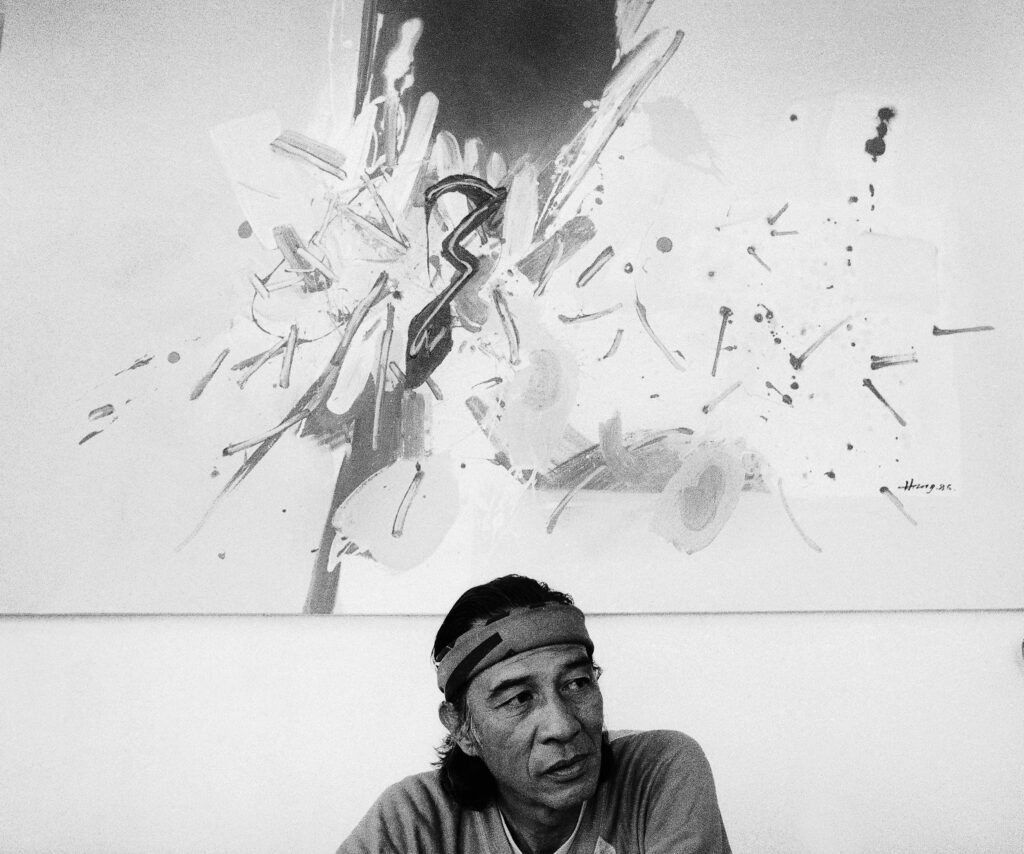
He is the greatest exponent of abstract expressionism in Venezuela. Marked by a childhood of war, influenced by the American expressionists, Hung expresses from a young age his imprint through corporal gestures.
1956
At a young age (19 years old) he attended the Julio Arraga School of Plastic Arts in Maracaibo and graduated with a Bachelor's Degree in Humanities.
1958
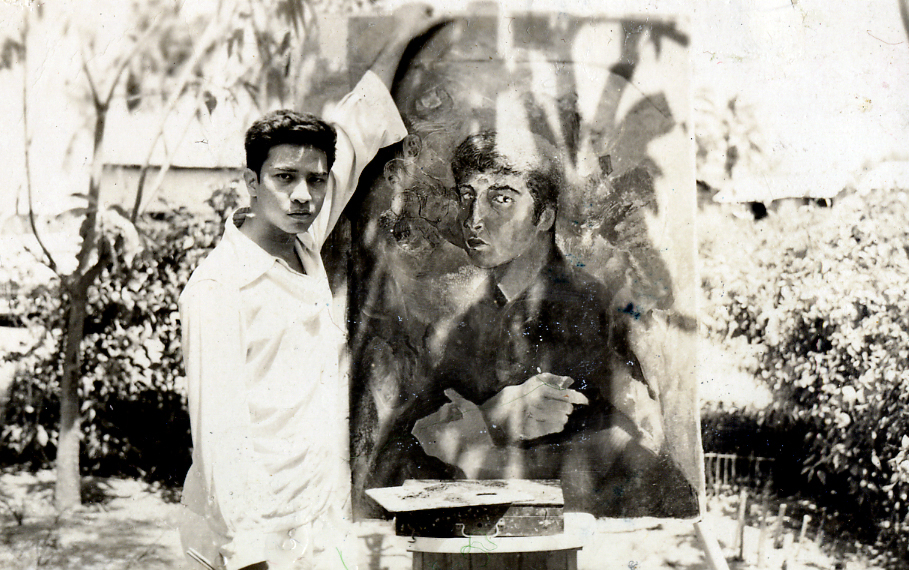
At the end of the 50's, he continued his studies at the Escuela de Artes Plasticas Cristobal Rojas in Caracas, returning to Maracaibo to participate in the Salón Municipal de Pintura with a Self-Portrait, with a pointillist technique, with which he received the First Prize and allowed him to travel to France with a scholarship to study at the School of Fine Arts in Paris, thus completing his training with several trips throughout France, Italy and England.
1963
In the 60's, back in Venezuela, he participated in several art salons, obtaining awards such as the Otero Vizcarrondo, the Official Venezuelan Art Salon in Caracas, the First Prize Salón D'Empaire in Maracaibo and an Honorable Mention in the III Biennial of Paris, France.
The following year he continues to participate in national art salons, with greater importance, where he wins the Armando Reveron and Rome Awards, Official Hall of Venezuelan Art, Caracas and First Prize Young Artists Salon at the Museum of Fine Arts in Caracas.
1965
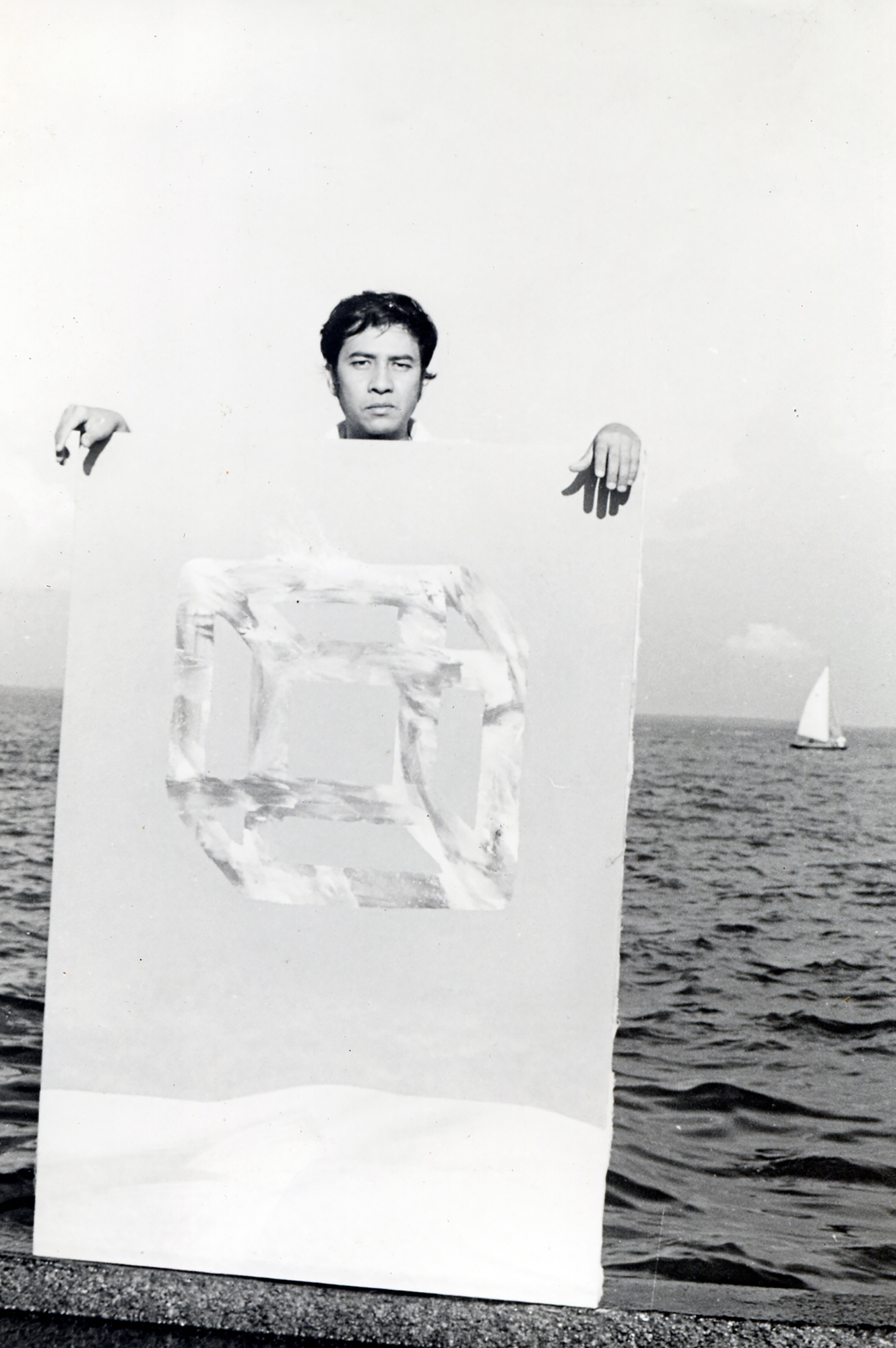
In 1965 he travels to Brazil, being part of the Venezuelan delegation in the 8th Biennial of Sao Paulo, where he receives the Felisa Lernier Award for his work Materias Flotantes. The same year he receives the National Prize of Painting of the Official Hall of Venezuelan Art, Caracas and First Prize Salón Arturo Michelena, Valencia.
1966
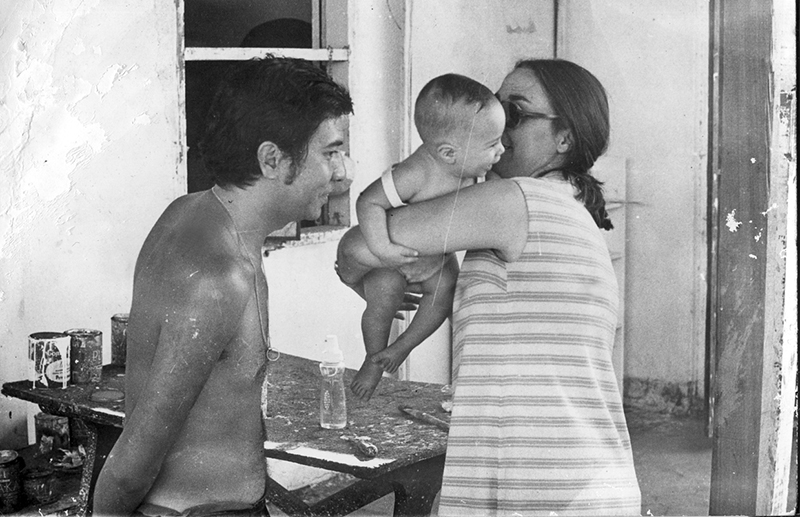
He forms his family and continues his studies on the pictorial gesture in expressionism, which characterizes him so much.
1971
In the early 1970s, he and his family moved to New York, where he continued to research and paint.
After some trips to several countries around the world, he returned to Venezuela, confirming that the best light for his works was that of Maracaibo, his home city.
During the period between the late '60s and early '80s he continues to win awards and completes his family with his three children.
Obtained for the third time the First Prize Salón Arturo Michelena, Valencia.
Invited by the Presidential Tour Commission to travel to China and Japan as a representative of Venezuelan culture.
1988
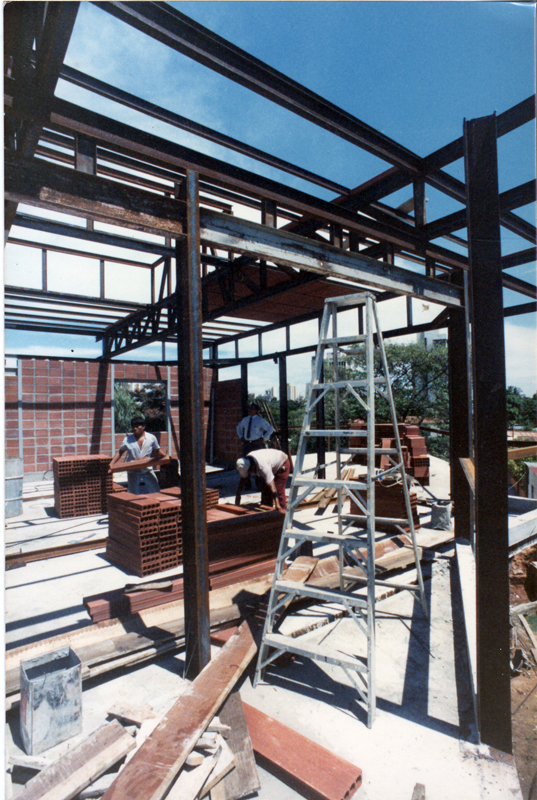
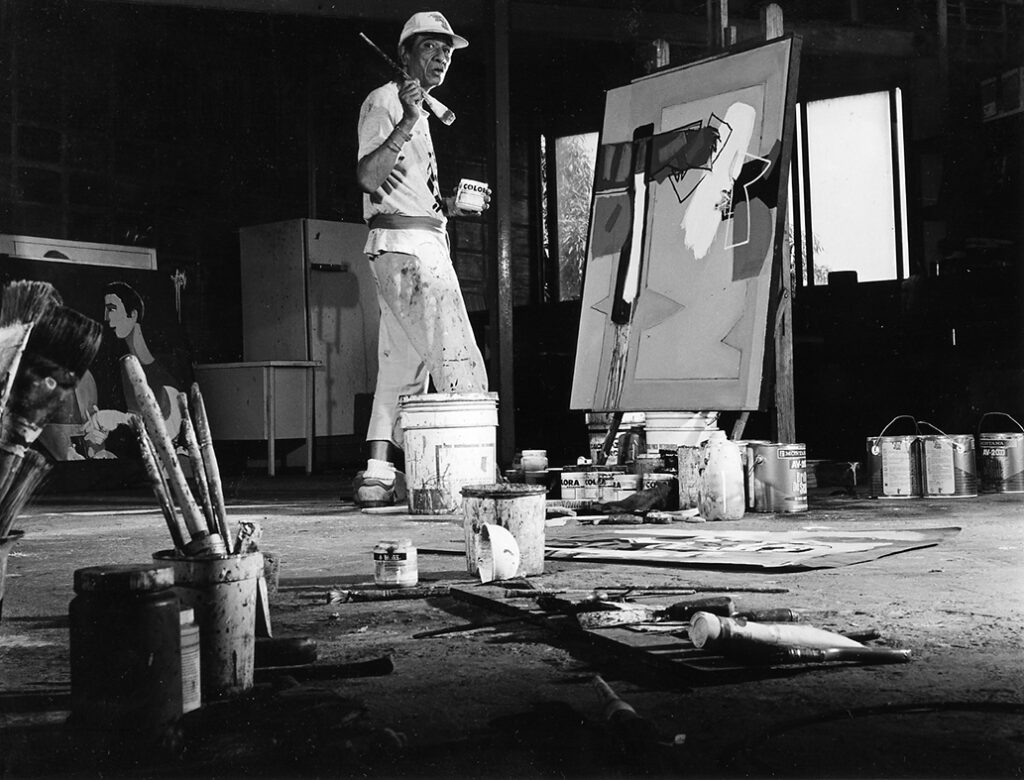
Culminates the construction of his Studio/Workshop, as a space for the production, conservation and exhibition of his work.
From this period on, he works on series of paintings, new searches that evolve over time.
1989
He made a research trip that took as a starting point the cities of San Francisco and Hawaii (USA), continuing through Beijing and Canton (China), Mumbai (India), Singapore (Singapore), Paris (France), Madrid (Spain) and culminated in the city of Caracas (Venezuela).
1991
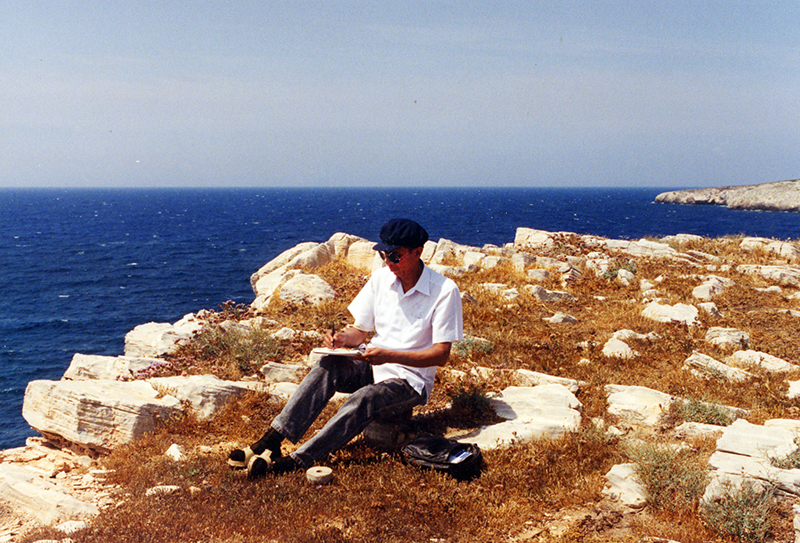
At the beginning of the last decade of the century, Hung travels to Paris, where he resides for several months to work on a series of works. He makes short trips to France and Greece.
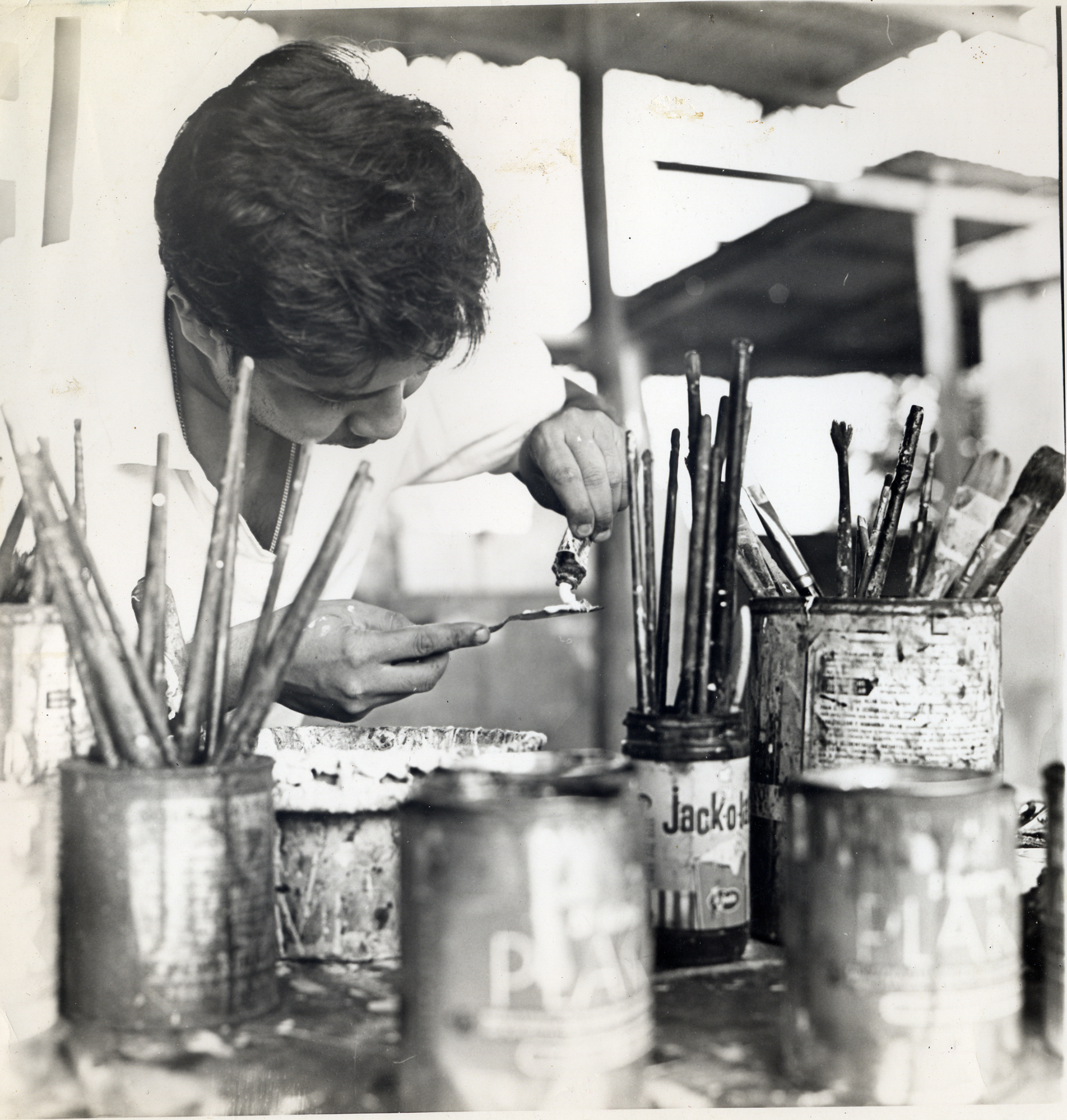
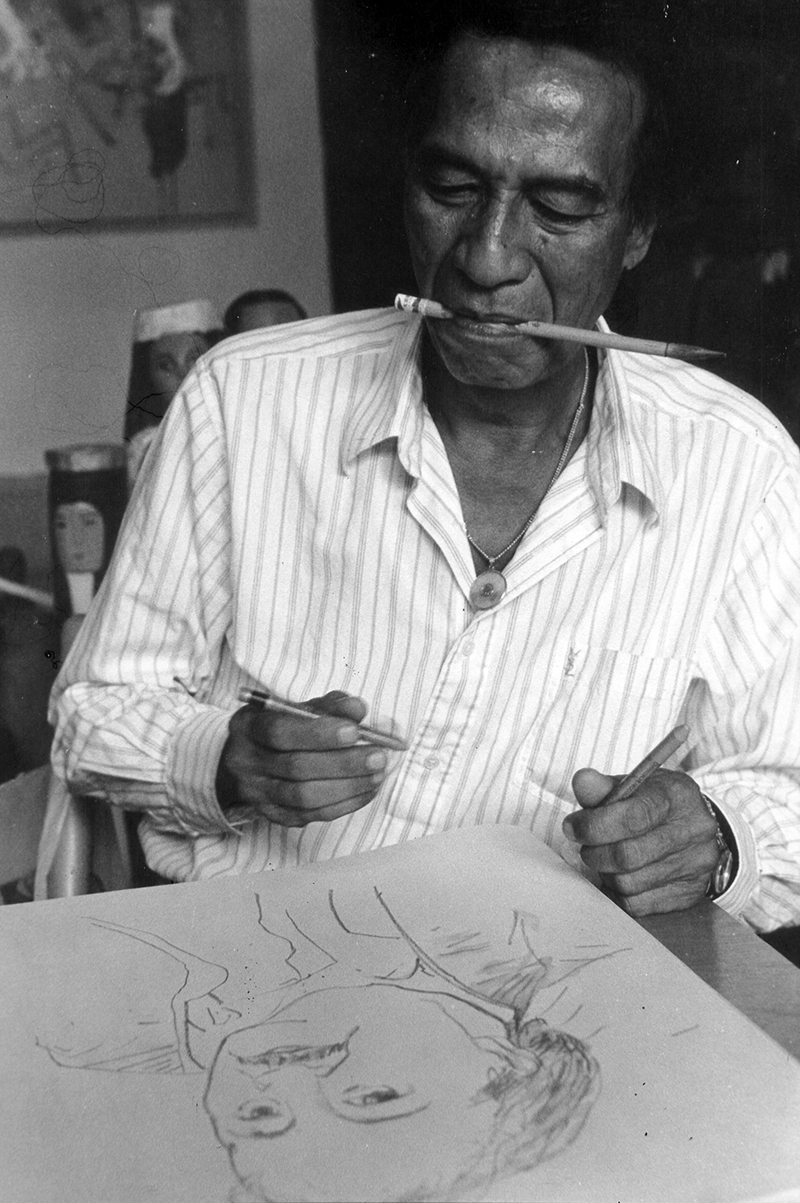
He returned to Venezuela, making multiple exhibitions. His passion for drawing and calligraphy, throughout his life, allowed him to leave a legacy of portraits of family environment, of everyday life for which he felt a great love, combining it with his great gestural works.
2001
He left on April 6 in search of his Floating Matter.